


How to Turn Marketing into a Profit Center
By Deb Andrews
Originally Published February 2020
Transitioning your marketing into a profit center is not going to be painless. Success is going to require flexibility in the short-term while remaining focused on the long-term goal. These are some of the important things we’ve seen in working with clients making the move to profit center marketing.
Turning Your Marketing into a Profit Center
Many marketers are stuck in a rut of creating content and putting out messages without clear objectives. They are keeping busy, but they haven’t done the research needed to understand target audiences and their buyer’s journey. Keep these important considerations in mind when you decide to embrace profit center marketing.
Know that it’s a multi-step process.
It would be great to have a fairy godmother show up and bibbity-bobbity-boo your marketing department into a profit center. But that’s not how it works. Transitioning from the approach that has led to cost center marketing requires taking a step back to first understand the business, the service or product, the competitive landscape, the target audience, and how marketing is currently doing its job.
Impatience is a big challenge we run into working with clients shifting to a profit center marketing approach. Leadership may not yet see the value of rejigging marketing strategy — the payoff isn’t immediate, after all. Thus, they revert to ongoing demands to get “things” out there or meet arbitrary deadlines from past efforts. This can get in the way of more constructive tasks like developing the necessary strategic roadmap, rebuilding the brand, and implementing marketing automation.
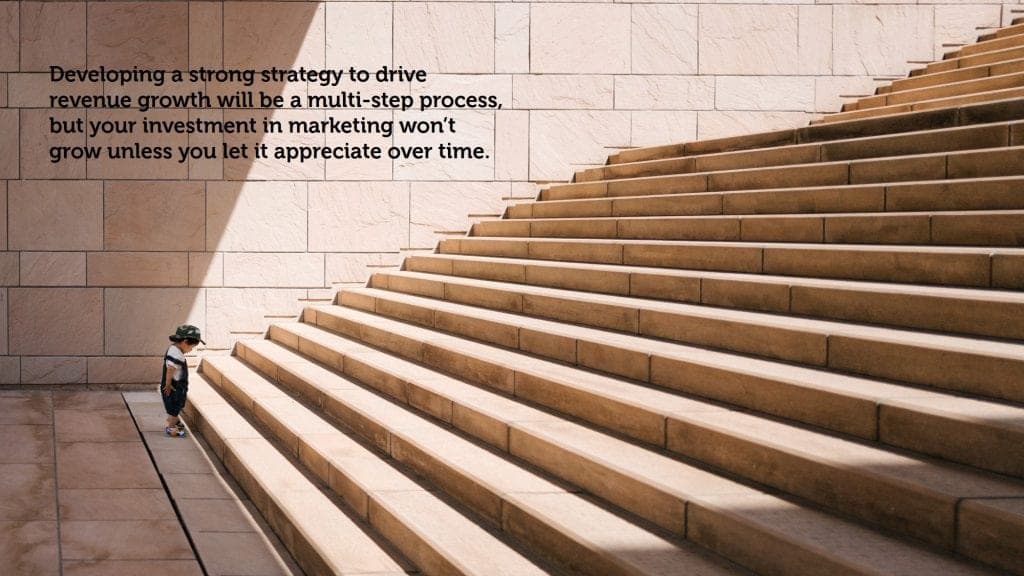
A lot of things will need to happen, so manage expectations upfront. It will pay off, but you have to believe in it if you’re going to be successful. That investment is not going to grow unless you let it appreciate over time.
Get the right technology and tools.
Profit center marketing takes advantage of project management tools to ensure projects are delivered on time. Plus, with the right technologies, this revamped marketing department can better assess how marketing time and money is spent and what’s working or wasted. With digitization and clear processes backed by technology, it is easier to achieve predictable and scalable results in the long-term.
Aligning marketing with sales and business objectives means rethinking expectations. The marketing department should be focusing on more than campaign arts and design. The profit center marketer looks at metrics that matter such as number of qualified leads driven through the funnel, revenue generated, and lifetime value of a customer.
Enlist support.
As with any other organizational change, the success of the shift in your marketing focus is going to require buy-in. You need to gain the support of your internal team. Involve your subject matter experts in discussions about who is responsible for what and how work will get done.
A successful profit center marketing department will be more integrated in the organization as a whole, gaining a seat at the table with decision makers. Yet, at the outset, focus on building momentum internally and building operational awareness of the changes among your marketing professionals.
This shift in strategic approach also requires financial support. There needs to be a willingness to invest in the change. At Marketri, we typically ask clients to plan on spending 5% to 7.5% of their revenue in the first year. That can be painful to hear. Especially when a realistic goal for profit center marketing is only to make that money back in the first year.
Yes, you read that correctly. Someone promising to double your ROI in the first year is probably overselling you.
After all, as mentioned already, the first year is spent developing the strategy and building out the new marketing tactics. In the second year, the marketing approach can tip over to more tactical with results that are going to pay off over time.

Get professional help.
Want to learn more about building effective marketing strategies?

Learn About the Power of Marketing Strategically

In-House, Agency, or Fractional: How Mid-Market Companies Should Resource Marketing
Compare in-house, agency, and fractional marketing models for mid-market companies, including the costs, tradeoffs, and strategic considerations of each approach.

Your First 90 Days With an AI Strategy: What to Build, What to Measure, and What to Leave Alone
The instinct when starting an AI strategy is to do everything at once. That instinct is what kills most initiatives. Here's the discipline that actually works: one outcome, one workflow, one undeniable win, with the exact week-by-week build to get you there.

Population: One
A title isn't a team. This field guide breaks down why the "marketing department of one" is the most expensive org-chart decision mid-market companies make — and what honest staffing actually looks like.

What a High-Performing Website Looks Like in the Age of AI
Most companies still treat their website like a brochure they pay someone to update. In the age of AI, that is a liability. Here is what actually separates a high-performing B2B website now, drawn from rebuilding Marketri's own site from the ground up in about a month.
Subscribe to our Newsletter
By subscribing, you agree to receive marketing emails from Marketri. See our Privacy Policy.