The More AI Does, the More Connection Matters
By Deb Andrews
Originally Published
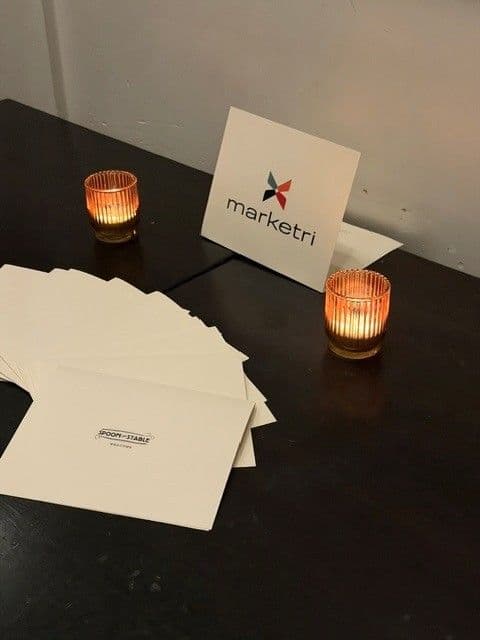
Earlier this month, the Marketri team spent three days together in Minneapolis for our annual retreat. We live in several different states, so this is the one time each year we are all in the same room. I came home grateful, and a little surprised by how much those three days mattered.
I use AI every day. So does every person on my team. It has made us faster and, in many ways, better. But the retreat reminded me of something that is easy to forget when so much of the workday happens on a screen. The work that matters most still depends on people who know and trust each other.
What a treasure map taught us about communication
Our guest speaker, Polly Meyer, focused on communication and how easily it breaks down when teams work mostly in a virtual environment. Then she put us to work.
We paired up and sat back to back. One person held a treasure map. The other held a blank page. Using words only, the first person had to describe the map so the second person could draw it.
The results were all over the place. Some pairs came close. Others produced drawings that looked nothing like the original. You could see exactly where communication worked and where it fell apart: the assumptions, the skipped steps, the words that meant one thing to the speaker and something else to the listener.
You cannot run that exercise on a Zoom call. And you cannot learn its lesson nearly as well from a slide.
Two hours, one room, one complete plan
Later in the retreat, we gave ourselves two hours to build a full marketing plan for a real program at a local animal shelter near me in Maryland. Nobody asked us to do it. I brought it as a case study because it is a cause I care about, and I wanted to see what the team could do together.
What they produced in two hours was remarkable. Someone would offer a half-formed thought, someone else would push it further, and a third person would turn it into something we could actually launch.
There is research behind what I watched. A study published in Nature by researchers at Columbia and Stanford found that pairs working face to face came up with more creative ideas than pairs working over video. The researchers traced the gap to the screen itself, which narrows where people focus. Interestingly, the video pairs were just as good at choosing the best idea. Video works for deciding. It is weaker for imagining.
The moments in between
Some of the best moments of the retreat had nothing to do with the agenda.
At dinner one night, we got to talking about holiday traditions. Katie DeMarco described her grandmother's famous holiday dish: a combination of Jell-O, tomato soup, and ground shrimp. The whole table laughed until we cried.
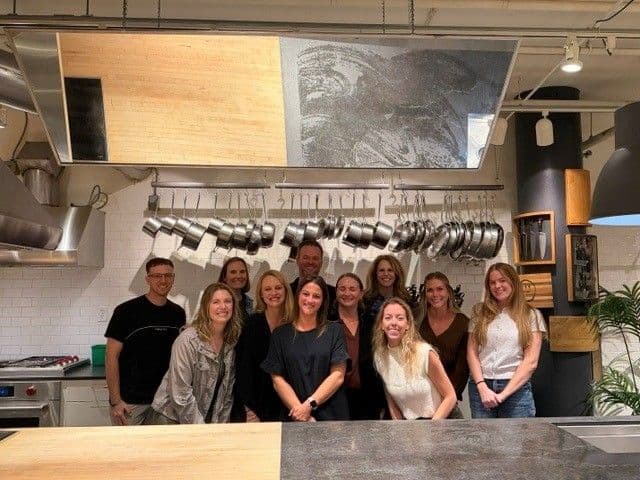
Those moments do not happen on Zoom, and they matter more than they seem. Gallup's research finds that fully remote employees are more likely than hybrid or on-site workers to report feeling lonely, and Gallup points to missing friendships, shared meals, and camaraderie as one likely reason. We came back from Minneapolis a closer, stronger team, ready to take on 2027.
Clients deserve the same
The same is true with clients. About a month ago, I started a new fractional CMO engagement with a company near where I live, which is a real luxury these days. I spent two and a half days at their executive retreat. By the end, I knew every executive by name and role, a bit about their backgrounds, what they want to achieve in 2027, and where 2026 was hard.
This week, I will meet their internal marketing team in person for the first time. We have talked many times on video, and those conversations have been good. I already know the in-person meeting will add something new.
That first month of face time is how I get up to speed quickly, but not carelessly. Before I build a marketing plan for a company, I want to understand the people who will carry it out.
What AI cannot do
AI cannot do that. It cannot sit across the table from an executive and learn how they like to work. And this is where I see leaders go wrong. They forget that AI cannot replace human thought.
Over the last few years, B2B thought leadership has started to sound the same. Articles, LinkedIn posts, and even the comments under them read like they came from the same machine, because many of them did. Handing a junior marketer an AI tool and asking for a piece on a complex topic, without ever talking to the experts inside the company, does not work. It already isn't working.
Buyers notice. In the 2025 Edelman and LinkedIn B2B Thought Leadership Impact Report, researchers looked at the people who shape a purchase behind the scenes, often in finance, operations, or legal. Eighty-five percent said a vendor's understanding of their business challenges was a top priority when it came time to buy. Seventy-nine percent said they are more likely to champion a vendor that consistently publishes high-quality thought leadership.
Search engines notice too. Google's spam policies name using generative AI to produce many pages without adding value for readers as a form of abuse that can push a site lower in results or out of them entirely.
Where AI earns its place
None of this means stepping back from AI. At Marketri, it has taken over much of the administrative work that used to fill our weeks. Meeting notes are captured automatically. Next steps are pulled from those notes and turned into tasks in our project management system, with a person approving each one before it goes in. Project management now takes about half the time it used to.
That time did not disappear. It went back into strategic and creative thinking, and into real conversations with clients and with each other. That is where we will win as a company: doing what only people can do, and letting technology handle the rest.
Three things to do before the year ends
- Get together. If your team works in one place, hold a holiday party. If you are spread out like we are, host a virtual gathering. We do a gift exchange. The point is to know each other as people.
- Hold a year-end town hall. Talk about what went well, what didn't, and most importantly, what you learned. After 22 years of running Marketri, I can tell you the bumpy years teach the best lessons.
- Thank your clients on their anniversaries. We have long sent custom cookies at the holidays. Now we also mark each client's anniversary with a note and a gift, as a way to say thank you for trusting us with their business.
Don't go it alone in 2027
This year I heard from a lot of CEOs and marketers, many of them through my LinkedIn posts, who are feeling the strain. Things that worked a few years ago don't work anymore. How companies go to market, how they structure their marketing teams, and how they choose their technology are all changing fast.
My advice for 2027 is to stay open to help. Don't try to solve it alone as a leader, and don't assume your internal team can figure out everything on its own. Bring in people who spend every day making sense of these changes. That is connection too.
I am grateful for our long-standing clients, who trust us with work that can make or break their revenue goals. I am grateful for the many new companies that joined us this year. I am grateful for a field that keeps us learning every day. And most of all, I am grateful for the Marketri team. They are the best.
I have learned that bumpy years teach the best lessons. This one taught me that the more AI does, the more the people matter.
Sources
- Brucks, M. S. and Levav, J., "Virtual communication curbs creative idea generation", Nature, April 2022
- Gallup, "The Remote Work Paradox: Higher Engagement, Lower Wellbeing", May 2025
- Edelman, "The Rise of the Hidden Buyer", June 2025, from the 2025 Edelman and LinkedIn B2B Thought Leadership Impact Report
- Google Search Central, "Spam policies for Google web search", last updated August 2026