

Blogging Bullies: When User Generated Comments Turn Nasty

On a recent peaceful, fall Sunday morning, I noticed an email from my colleague, Eileen Martin, marked ‘highly important’ mixed in with the normal overnight spam. She expressed, “Wow, did you see the rude comments on your LinkedIn page by a couple folks re: the SEO blog post? Have you heard from those guys before? I was taken aback by them.”
At first, I generally felt pleased that my post had generated some conversation. After all, the sharing of different viewpoints and a healthy dialogue about best practices is all good. Right? In marketing, as opposed to other professions like engineering, accounting and the law, there are few hard and fast rules. Marketers depend on guiding principles and then the rest is really trial and error and learning from one another.
Then I looked at the comments from two ‘gentlemen.’ Either I made my coffee way too strong or what they wrote instantly gave me a bitter taste. Here’s what they said:
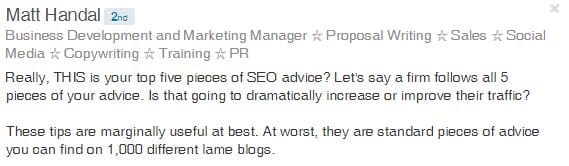

I felt as though I were in a scene from “Mean Girls,” except these were mean dudes, one of whom was in my LinkedIn network. Shouldn’t user generated comments be constructive instead of simply insulting? I opened an image that I saved from one of my marketing inspirations, Mark Schaefer, just to double check my thinking on this one.
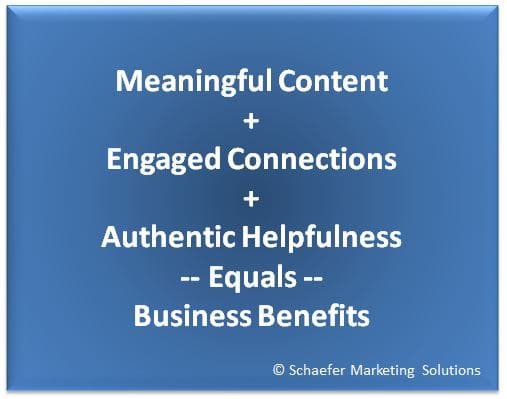
Mr. Handal’s and Mr. Siben’s comments were not meaningful, authentically helpful nor did they offer any business benefits. Reflecting back on my post, do I wish I was able to provide more utility to these professionals? Sure! I actually spent $4,000 to travel to INBOUND 2014 to hear the best marketers in the country talk about content marketing, social media marketing and SEO. In fact, my post was written directly from a talk given by Rand Fishkin of MOZ.
That said, my SEO post was written for Marketri’s target audience – in-house marketers and owners of mid-sized professional services firms. It’s specified right in the title! I wrote about what my audience could do to directly impact SEO and did so in a manner that they could understand. I’ve received quite a bit of positive feedback from my target audience. While no post is perfect, I’m confident that I provided value. I would never hit publish otherwise.
Donald Trump may have called these guys, “losers.” Bill O’Reilly might say they are “pinheads.” But, name calling or being purposely insulting just to make myself feel more important is not my style. They are likely very competent professionals. Both men, however, need to brush-up their Inbound Marketing skills and try much harder to be authentically helpful instead of blogging bullies.